From college student to Licensed Financial Planner: My exam journey


Mason Flom is a senior at South Dakota State University pursuing a degree in finance with a passion for financial planning. He is currently interning at Renovo Financial Partners, where he is gaining hands-on experience in the financial services industry. With a strong desire to help individuals and families achieve their financial goals, Mason Flom is eager to launch his career as a financial planning professional upon graduation. He is committed to building meaningful client relationships and making a lasting impact in the lives of those he serves.
When I decided to pursue a career in financial planning, I knew that earning my license was one of the most important first steps I could take. As a senior at South Dakota State University interning at Renovo Financial Partners, I had a clear vision of where I wanted to go, and passing the Securities Industry Essentials (SIE) exam was the gateway to getting there. Here's an honest look at my prep journey, the challenges I faced, and what I learned along the way.
Why I decided to take the exam
My motivation was simple: I wanted to be a financial planner. I want to help people make smart decisions with their money, build toward their goals, and feel confident about their financial future. Taking this exam wasn't just a box to check; it was a meaningful step toward the career I've been working toward throughout college. Having the opportunity to intern at Renovo Financial Partners made that goal feel even more real, and earning this license felt like the right move to complement the hands-on experience I was already gaining.
The biggest challenge: Burnout
If I'm being honest, the hardest part of the process wasn't the material itself; it was staying mentally fresh throughout the grind. Burnout and feeling overwhelmed were real obstacles for me. Studying for a licensing exam while balancing college coursework, an internship, and everyday life is no small feat, and there were moments where it all felt like a lot to carry at once.
How I structured my study routine
To stay consistent, I committed to studying about five days a week, four hours a day. Having that structure made a big difference; it turned studying into a habit rather than something I had to talk myself into each day. That said, looking back, one thing I'd do differently is make a greater effort to study on weekends and be more intentional about taking breaks during study sessions. Powering through for four hours straight isn't always the most effective approach. Shorter, focused sessions with built-in breaks would have helped me absorb the material more deeply rather than just moving through it.
The strategies that actually worked
Two things made a real difference in how I retained information. First, whenever I missed a question on a practice exam, I wrote it down. Keeping a running log of my mistakes forced me to confront the concepts I kept getting wrong rather than glossing over them. Second, I leaned into memory tricks, coming up with sayings or mental associations to lock in concepts that didn't come naturally. It sounds simple, but it was surprisingly effective.
My finance background from college also gave me a leg up. A lot of the terminology and foundational concepts were already familiar, which meant I could focus more of my energy on the areas that were genuinely new to me rather than starting from scratch.
Test day nerves and the power of consistent practice
Going into test day, I was nervous; that's just the truth. But I had something important working in my favor: on practice exams, I was consistently passing. That track record gave me the confidence to trust my preparation even when the nerves kicked in. Consistent practice doesn't just build knowledge; it builds the mental assurance that you're ready.
How Achievable helped me stay on track
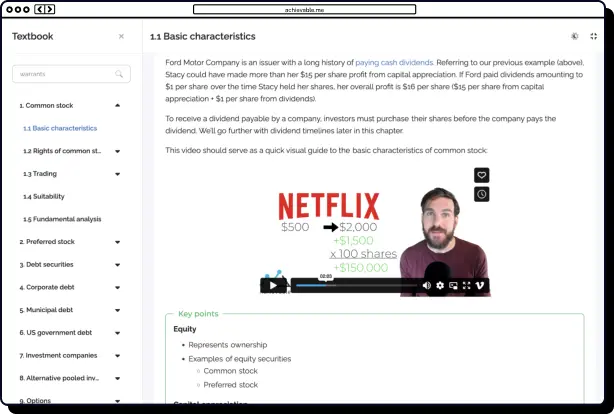
One of the tools that kept me moving forward was Achievable. The platform gave me a set amount of studying to complete each day, which took the guesswork out of planning my sessions. Knowing exactly what I needed to accomplish made it easier to stay on track, and the interface was intuitive and easy to navigate, one less thing to figure out when I was already juggling a lot.
What's next
Passing this exam is just the beginning. Next up, I'll be taking my Life, Accident and Health insurance license exam, followed by the Series 7 and Series 66. Each step brings me closer to being fully equipped to serve clients as a financial planner, and I'm genuinely excited about the road ahead.
If you're preparing for a licensing exam, my biggest advice is this: stay consistent, write down what you get wrong, and trust the process. The nerves on test day are real, but so is the preparation you put in.